


Mentre il governo Meloni mette un tetto agli studenti stranieri nelle classi italiane, Levi’s apre le porte a una mostra sull’inclusione in collaborazione con AFA, “Voice of Denim”
Afro Fashion Association riporta al centro della moda italiana inclusività ed equità con una mostra sul denim portata avanti interamente da giovani talenti BIPOC
In questi giorni frenetici della Milano Fashion Week (MFW), si fa spazio, un passo alla volta, un’organizzazione no-profit fondata nel 2015 e attiva tra Italia e Africa subsahariana: AFA, Afro Fashion Association. Dietro c’è Michelle Francine Ngonmo, nata in Camerun e arrivata in Italia da bambina, che ha fatto crescere l’associazione da un pugno di volontari a una rete di oltre ottanta persone. Il suo obiettivo è aiutare i giovani talenti BIPOC (Black, Indigenous, and People of Color) a trovare un proprio spazio nel panorama italiano.
Levi’s come amplificatore dei creativi sotto-rappresentati in Europa
La mostra, ospitata alla Casa degli Artisti di Milano e aperta gratuitamente al pubblico fino al 2 ottobre, è il frutto di un anno di mentorship: trenta talenti provenienti da 17 Paesi, sotto la curatela di Jordan Anderson, hanno lavorato sul denim deadstock di Levi’s. Non è un caso che a dare nuova vita a quelle scorte siano artisti che conoscono cosa significa essere poco rappresentati: qui ciò che era stato messo da parte diventa materia per raccontare nuove identità. Per Mariella Finiguerra, head of marketing Italia e Iberia di Levi’s, un brand con una simile eredità deve evolversi per restare rilevante, e questo significa «aprirsi a voci, narrazioni e comunità diverse».
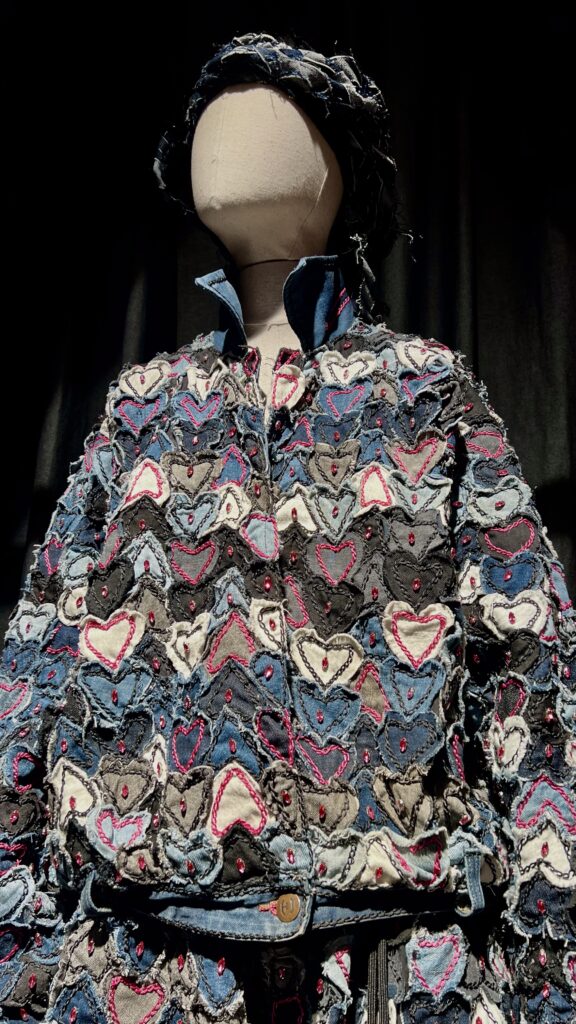
Un completo, bomber e pantaloni a gamba larga, è interamente ricoperto da centinaia di cuori in denim sovrapposti come scaglie, in tutte le sfumature del blu, dal chiaro al lavaggio scuro, con inserti di grigio, nero e crudo. Gli orli sfrangiati e non rifiniti lasciano il tessuto vivo e tridimensionale, mentre il filo rosa fucsia che ne ricama i contorni e i piccoli punti di colore accendono l’insieme. Il risultato è un patchwork armonioso ma d’impatto.
Il denim come manifesto di rinascita, tra ponteggi e cantieri a vista
Ma non sono stati solo gli abiti a raccontare qualcosa. I giovani talenti si sono occupati di tutto, dalla fotografia alla curatela, fino al sound design, sotto la guida dei tutor che li hanno affiancati per un anno di mentorship. L’idea alla base della mostra è che il denim racconti memoria, lavoro, identità, resistenza e trasformazione. Ovviamente nulla di nuovo: il denim, come sappiamo, è sempre stato una manifestazione di cambiamento. Negli anni Sessanta furono proprio le attiviste nere dello SNCC (Student Nonviolent Coordinating Committee) a scegliere di abbandonare gli abiti “rispettabili” per indossare il denim dei braccianti afroamericani con cui lavoravano fianco a fianco: non una scelta estetica, ma un’uniforme politica, un modo per abbattere le barriere di classe e dichiarare apertamente da che parte si stava.
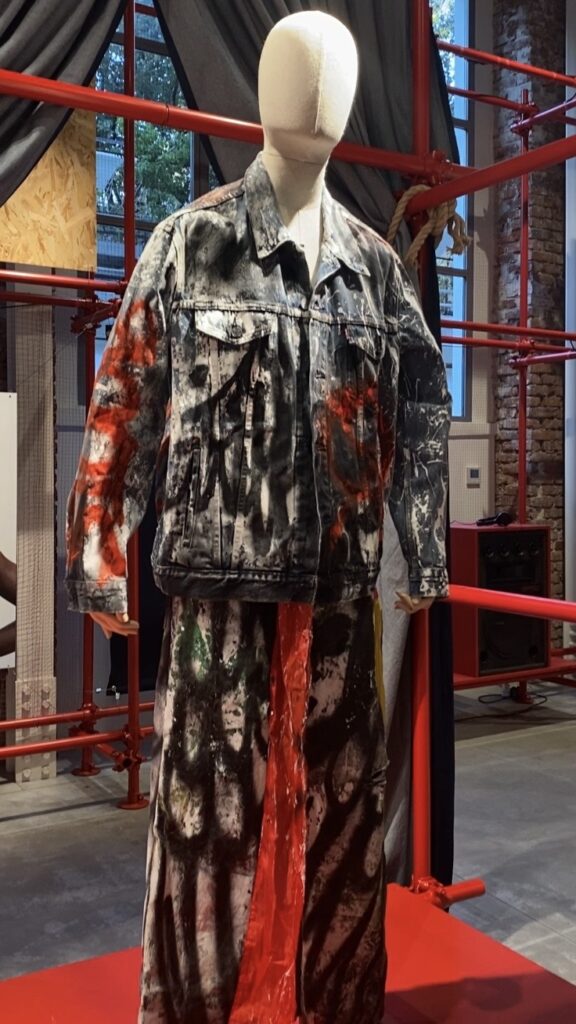
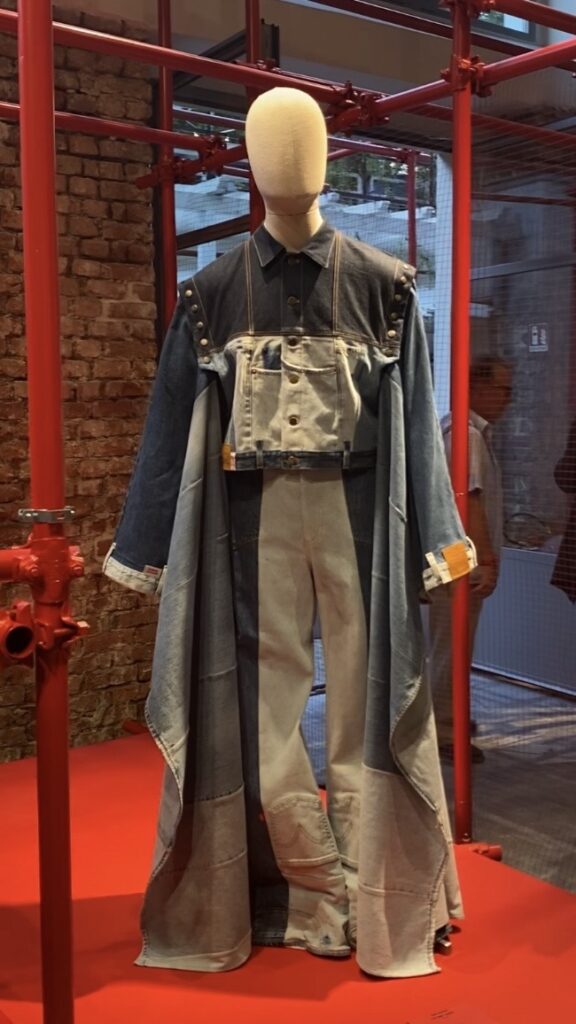
Quella stessa scelta di non nascondere la fatica, di restare volutamente incompiuti, si ritrova nell’allestimento della mostra: ponteggi, reti metalliche, corde e materiali di recupero, dipinti di rosso fuoco e lasciati “non finiti”, sono la cornice di questo immenso quadro. Perché anche l’identità culturale, come quella politica, non si ferma mai: è un cantiere sempre aperto. Ed è proprio qui che “Voices of Denim” trova il suo significato più forte: non soltanto riportare il denim al centro della scena, ma usarlo come spazio per dare visibilità a chi, troppo spesso, quello spazio non lo ha avuto.
English version
As the Meloni government moves to cap the number of foreign students in Italian classrooms, Levi’s opens its doors to an exhibition on inclusion in collaboration with AFA: Voices of Denim
Afro Fashion Association brings inclusivity and equity back to the forefront of Italian fashion with a denim exhibition created entirely by young BIPOC talents.
Amid the frenetic pace of Milan Fashion Week (MFW), a non-profit organisation founded in 2015 and active across Italy and sub-Saharan Africa is gradually carving out its space: AFA, Afro Fashion Association. At its helm is Michelle Francine Ngonmo, born in Cameroon and brought to Italy as a child, who has grown the organisation from a handful of volunteers into a network of more than eighty people. Its mission is to help young BIPOC (Black, Indigenous, and People of Color) talents find their place in the Italian creative landscape.
Levi’s as a platform amplifying underrepresented creatives in Europe
Hosted at Casa degli Artisti in Milan and open to the public free of charge until 2 October, the exhibition is the culmination of a year-long mentorship programme. Thirty talents from 17 countries, under the curatorship of Jordan Anderson, have worked with Levi’s deadstock denim. It is no coincidence that artists who understand what it means to be underrepresented have been entrusted with giving new life to these surplus materials: here, what was once set aside becomes a medium through which to tell new stories of identity.
For Mariella Finiguerra, Head of Marketing for Italy and Iberia at Levi’s, a brand with such a rich heritage must evolve to remain relevant. This means “opening up to different voices, narratives and communities”.
One standout look, comprising a bomber jacket and wide-leg trousers, is entirely covered in hundreds of overlapping denim hearts, arranged like scales in shades ranging from pale blue to dark indigo, interspersed with grey, black and raw denim. Frayed, unfinished edges leave the fabric exposed, enhancing its texture and three-dimensional quality, while fuchsia-pink stitching traces the contours of each heart and small pops of colour bring the ensemble to life. The result is a harmonious yet striking patchwork.
Denim as a manifesto of rebirth, amid scaffolding and exposed construction
But the garments were not the only elements telling a story. The young talents were involved in every aspect of the exhibition, from photography and curation to sound design, working under the guidance of mentors who supported them throughout the year-long programme.
At the heart of the exhibition is the idea that denim can tell stories of memory, labour, identity, resistance and transformation. Of course, this is nothing new: denim has always been a symbol of change. In the 1960s, it was Black activists within SNCC (the Student Nonviolent Coordinating Committee) who chose to abandon “respectable” clothing in favour of the denim worn by the African American sharecroppers they worked alongside. This was no aesthetic choice, but a political uniform: a way to break down class barriers and make their allegiances unmistakably clear.
That same refusal to conceal hardship, that deliberate embrace of the unfinished, is reflected in the exhibition’s installation. Scaffolding, metal mesh, ropes and reclaimed materials, painted fiery red and deliberately left unfinished, frame this vast, immersive tableau.
Because cultural identity, like political identity, is never static: it is a worksite that is perpetually under construction. And it is precisely here that Voices of Denim finds its most powerful meaning: not simply by bringing denim back into the spotlight, but by using it as a space in which to give visibility to those who, all too often, have been.
Article written by Ingrid Giordan